The search landscape has fundamentally shifted.
No longer do users simply type queries into Google and click through to websites.
Today, 37% of product discovery queries start in AI interfaces like ChatGPT, Perplexity, and Google’s AI Overviews. Around 50% of Google searches already have AI summaries.
If your brand isn’t showing up in these AI-generated answers, you’re potentially losing visibility to your competitors.
This is where AI search visibility tools become essential.
AI search visibility tools help businesses track and improve how their brand appears in AI-generated answers from platforms like ChatGPT, Google AI Overviews, Gemini, and Perplexity.
These tools focus on metrics like brand mentions, citations, sentiment, and competitor comparisons to optimize for this new search landscape.
Key players in this field include SE Ranking, Ahrefs, and specialized tools like PromptWatch AI and Scalenut AI.
These tools analyze your presence across different LLMs (Large Language Models) and provide insights to boost your content’s inclusion in AI summaries, a practice called Generative Engine Optimization (GEO) or AI Optimization.
These platforms help you monitor how and where your content appears across large language models, track brand mentions, analyze competitor positioning, and ultimately, optimize your presence in the AI-powered search era.
Unlike traditional SEO metrics like click-through rates and impressions, AI visibility requires a new approach to measurement and optimization.
In this comprehensive guide, we’ll explore what AI search visibility tools are, examine the top software options available today, break down their features and pricing, and provide best practices to help your business stay visible where your audience is searching.
What Are AI Search Visibility Tools?
AI search visibility tools are platforms that track, measure, and optimize your brand’s presence across large language models (LLMs) and AI search engines.
They monitor where your content appears in AI-generated answers, how often your brand gets cited, what sentiment is associated with your mentions, and how you compare to competitors.
Think of these tools as the AI-era equivalent of traditional SEO tools. While Google Search Console tracks your rankings in Google’s blue links, AI visibility tools track your citations in ChatGPT responses, Gemini answers, Perplexity summaries, Claude outputs, and other AI platforms.
Why AI Search Visibility Tools Matter
The rise of AI search has created what researchers call the “zero-click phenomenon.” Users get answers directly from AI platforms without ever visiting your website. Gartner predicts that traditional search engine volume will drop 25% by 2026 due to AI platform usage.
AI visibility tools solve a critical problem: they provide visibility into what’s previously been invisible. Without these tools, you don’t know if your brand appears in AI answers, which content drives citations, or why competitors might be outranking you in these new search interfaces.
Key Features to Expect
Most AI search visibility tools offer these core features:
- Real-time monitoring tracks your brand mentions and citations across multiple AI platforms simultaneously.
- Citation tracking shows which specific pages get cited and how often.
- Sentiment analysis reveals whether your brand mentions are positive, neutral, or negative.
- Competitor comparison helps you understand your visibility relative to competitors.
- Multi-LLM support covers ChatGPT, Google AI Overviews, Gemini, Perplexity, Claude, and emerging platforms.
- Prompt testing lets you see how specific queries return your content.
- ROI reporting connects AI visibility to business outcomes.
Top 12 AI Search Visibility Tools in 2026
Here are the top 12 AI search visibility software options for tracking your brand name across AI overviews.
1. Scalenut
Scalenut is an all-in-one AI-powered SEO and content platform that includes dedicated AI brand visibility tracking capabilities.

Trusted by over 100,000 marketers globally, Scalenut combines content creation, keyword research, competitor analysis, and brand visibility monitoring in a unified platform.
Their AI Brand Visibility Tracker specifically helps businesses monitor how their content appears across ChatGPT, Google AI Overviews, Perplexity, and other major AI engines.
Key Features
- Cruise Mode generates long-form content specifically structured to be recognized and cited by AI models like ChatGPT, Google AI Overviews, and Perplexity.
- Prompt-based keyword clustering builds topical authority with intent-rich clusters and LLM-ready queries. The platform surfaces LLM-relevant searches you might otherwise miss.
- Content optimization features highlight missing AI prompts and provide NLP plus keyword plus LLM optimization recommendations.
- The Brand Visibility Tracker shows your visibility percentage across multiple LLMs, includes competitor benchmarking, and provides prompt and source-level insights.
- Reddit Assistant helps tap into user-generated discussions that boost AI brand recognition.
Pros
- Unified platform combines content creation and visibility tracking in one tool.
- Cruise Mode specifically optimizes for AI citations from creation.
- Competitive pricing compared to enterprise-focused platforms.
- Prompt-based keyword clustering helps plan content strategy for AI understanding.
- Comprehensive feature set appeals to content teams handling creation through optimization.
- Strong user reviews praising UI simplicity and ROI.
Cons
- Combining multiple tools means learning curve for all features.
- Higher pricing on Growth and Pro plans relative to standalone AI visibility tools.
- Integration limitations with other platforms like WordPress. Some users report occasional repetitive outputs from AI content generation.
- Not ideal for businesses needing standalone AI visibility tracking only.
Pricing
- Essential Plan: $39/month or $22/month annually (100,000 AI words, 40+ AI templates, limited article creation).
- Growth Plan: $79/month or $47/month annually (unlimited AI words, up to 30 keyword clusters, 30 SEO articles, 30 page optimizations).
- Pro Plan: $149/month or $89/month annually (up to 75 keyword clusters, 150 SEO articles, 150 page optimizations, dedicated CS manager).
All plans include a 7-day free trial. Add-ons are available for additional features.
How It Helps Your Business
Scalenut helps your business if you want to combine content creation and AI visibility optimization in a single platform. Instead of optimizing existing content for AI visibility, Scalenut lets you create AI-optimized content from the start using Cruise Mode. The integrated approach means content teams work more efficiently without context switching between tools. For businesses already creating content, Scalenut eliminates the need to purchase separate standalone AI visibility tools while still providing comprehensive citation tracking.
Learn more at https://scalenut.com/
2. SE Ranking AI Visibility Tracker
SE Ranking built its reputation on affordable, user-friendly SEO tools. Their AI Visibility Tracker extends this philosophy into LLM tracking.

The tool offers a comprehensive three-part approach covering Google AI Overviews, AI Mode, and traditional LLM platforms.
Key Features
- Three-part monitoring suite covers Google AI Overviews, AI Mode for conversational search, and general LLM visibility.
- The “No cited” feature reveals competitor mentions where your brand is absent, providing gap analysis.
- Local SEO capabilities translate AI visibility data by region. Integrated into SE Ranking subscriptions at no extra cost.
- Monitors ChatGPT, Perplexity, Gemini, and other major platforms.
Pros
- No extra cost if you’re already using SE Ranking.
- Strong local SEO capabilities.
- User-friendly interface accessible to SMBs.
- Includes the “No cited” feature that competitors lack.
- Affordable entry point compared to Semrush or Ahrefs.
Cons
- Limited to existing SE Ranking users for seamless integration.
- Add-on pricing required for expanded limits.
- Smaller user base means less community support.
- May lack some advanced features of premium platforms.
Pricing
Included in SE Ranking Pro ($119/month) and Business ($259/month) plans. Standalone add-on available from $89/month to expand limits.
How It Helps Your Business
SE Ranking helps your business save money while still getting comprehensive AI visibility tracking. The local SEO capabilities are valuable if you serve multiple geographic markets. The “No cited” feature provides clear content opportunities for expansion.
Learn more at https://seranking.com/
3. PromptWatch AI
PromptWatch AI is a specialized platform designed to monitor, analyze, and optimize brand visibility across large language models (LLMs) and generative AI engines.
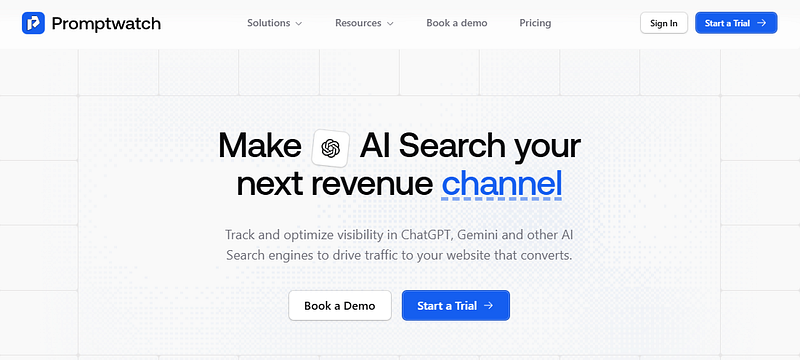
Built for marketing teams, SEO professionals, and product-led growth companies, PromptWatch AI focuses on tracking how prompts, brand mentions, and citations appear across ChatGPT, Perplexity, Claude, and Google AI Overviews.
Unlike broader SEO tools, PromptWatch AI is laser-focused on AI visibility intelligence.
Key Features
- Prompt Monitoring Dashboard tracks brand mentions across multiple LLMs, showing citation frequency and visibility percentage.
- Competitor Prompt Benchmarking reveals how rival brands are referenced in AI-generated answers, with side-by-side comparisons.
- Prompt Optimization Insights highlight missing or underperforming prompts and suggest LLM-ready phrasing for better recognition.
- AI Search Analytics provide visibility into trending queries surfaced by generative engines that traditional SEO tools miss.
- Custom Alerts notify teams when brand visibility changes significantly across AI platforms.
Pros
- Purpose-built for AI visibility tracking, avoiding feature bloat.
- Competitor benchmarking provides actionable intelligence for prompt strategy.
- Lightweight interface makes it easy to adopt without steep learning curves.
- Real-time alerts ensure teams react quickly to shifts in AI-generated brand mentions.
Cons
- Limited content creation tools compared to all-in-one platforms.
- Pricing may feel high for small businesses needing only occasional visibility checks.
- Integration options with CMS platforms are still developing.
Pricing
- Essential Plan: $89/month (basic visibility tracking, 1 website, 3 competitors).
- Professional Plan: $199/month (multi-brand tracking, 2 websites, advanced analytics, unlimited competitors).
- Business Plan: $499/month (multi-brand tracking, 5 websites, advanced analytics, unlimited competitors).
How It Helps Your Business
PromptWatch AI helps businesses that want to understand and improve how their brand is represented in generative AI responses. Instead of focusing on traditional SEO metrics, it provides visibility into the emerging AI-driven search ecosystem. For companies where AI citations drive traffic, credibility, or customer acquisition, PromptWatch AI ensures you stay ahead of competitors by optimizing prompts and monitoring brand presence across multiple engines.
Learn more at https://promptwatch.ai/
4. Rankability AI Analyzer
Rankability extended its content optimization platform with an AI Analyzer that tests branded and commercial prompts across answer engines.

The tool maps where your pages appear in AI citations and identifies gaps compared to competitors.
Key Features
- Prompt-level testing across multiple AI platforms.
- Competitive citation comparison shows where competitors rank but you don’t.
- Integration with Rankability’s Content Optimizer and keyword research.
- Branded and commercial prompt testing. Real-time monitoring and alert system.
Pros
- Integrates with existing Rankability workflows.
- Good for agencies using Rankability’s optimization stack.
- Prompt-level granularity.
- Real-time monitoring helps catch changes quickly.
- Includes gap analysis for strategy planning.
Cons
- Requires Rankability subscription.
- Higher price point for smaller businesses. Restricted to higher-tier plans.
- Limited standalone features compared to purpose-built AI tools.
Pricing
Bundled within Rankability plans starting at $149/month. AI Analyzer access available at higher agency tiers. Contact sales for current prompt and seat limits.
How It Helps Your Business
Rankability AI Analyzer helps your business if you’re already using Rankability for content optimization. The platform handles the full content lifecycle from strategy through AI visibility tracking.
Learn more at https://www.rankability.com/
5. Ahrefs Brand Radar
Ahrefs, another SEO industry veteran, introduced Brand Radar to track LLM visibility.

Built on top of Ahrefs’ rich link and content index, this tool brings their research capabilities to AI search tracking. During its beta phase, Brand Radar is available free across all Ahrefs plans.
Key Features
- Monitors brand mentions across Google AI Overviews and other major LLM platforms.
- Built on Ahrefs’ comprehensive content and link index.
- Source transparency shows exactly which pages get cited.
- Competitive analysis reveals how your visibility compares.
- Trend tracking shows how visibility changes over time.
Pros
- Free during beta for all Ahrefs subscribers.
- Built on trusted Ahrefs infrastructure and data.
- Excellent for existing Ahrefs users.
- Solid historical data from link index.
- Well-regarded company with strong reputation.
Cons
- Still in beta with ongoing improvements.
- UI needs refinement according to user feedback.
- Limited to Ahrefs users.
- Data sampling currently captures only a fraction of actual conversations.
- Will require paid add-on post-beta.
Pricing
Currently free in beta. Will become a paid add-on to Ahrefs plans ($129 per month base) after beta phase ends.
How It Helps Your Business
Brand Radar helps your business if you’re already invested in Ahrefs. It’s an excellent low-risk way to test AI visibility tracking before committing budget. The Ahrefs data foundation means citations have credibility.
Learn more at https://ahrefs.com/brand-radar
6. Profound
Profound launched in 2024 and quickly established itself as a leader in AI search visibility.

The company raised $20 million in funding during 2025 and now serves enterprise brands looking to optimize their presence across multiple AI engines.
Profound specializes in tracking brand visibility with 400 million plus monthly insights from real user conversations.
Key Features
- Query Fanouts technology reveals how AI systems transform user questions into multiple search queries behind the scenes. This helps you understand not just what’s visible, but why.
- Prompt Volumes Dataset provides access to over 400 million real, anonymized conversations growing by 150 million every month. This gives you visibility into what people actually ask AI systems.
- Multi-LLM coverage includes ChatGPT, Google AI Overviews, Gemini, Perplexity, Claude, and emerging platforms.
- Advanced analytics show citation trends, sentiment, and competitive positioning. SOC 2 Type II certification ensures enterprise-grade security.
Pros
- Highest AEO score in the market at 92/100.
- Enterprise brands report 7x citation increases within 90 days.
- Clean, responsive interface with rapid feature updates.
- Comprehensive coverage of emerging AI engines.
- Research-backed insights based on real user conversations.
Cons
- Higher price point targets enterprise clients.
- Still relatively early stage compared to established platforms like Ahrefs and Semrush.
- May be overkill for small businesses or solo practitioners.
- Complex feature set requires time to master fully.
Pricing
Contact sales for custom pricing. Enterprise plans available. Generally positioned as a premium offering.
How It Helps Your Business
Profound helps your business understand the complete picture of how AI systems perceive and discuss your brand. By revealing Query Fanouts, you can optimize content not just for direct queries, but for the hidden questions AI systems use to research answers. The massive real-conversation dataset means you’re not guessing about search trends. You’re seeing actual demand patterns.
Learn more at https://www.tryprofound.com/
7. Semrush AI Visibility Toolkit
Semrush is one of the oldest and most established names in SEO software.

Their AI Toolkit extends their existing platform into LLM tracking, making it a natural choice for teams already using Semrush.
The integration means you get both traditional SEO data and AI visibility data in one dashboard.
Key Features
- Tracks mentions across ChatGPT, Google’s AI Overviews, Gemini, and emerging platforms.
- Provides sentiment analysis showing whether mentions are positive or negative.
- Suggests structural changes to improve how AI systems parse your content, like schema markup and FAQ formatting.
- Competitor comparison shows you how often competitors get cited relative to you.
- ChatGPT SEO prompts help you test content variations before monitoring.
Pros
- Seamless integration with existing Semrush features.
- Familiar interface for existing users.
- Combines traditional SEO and AI visibility in one platform.
- Real-time monitoring across multiple AI engines.
- Good documentation and customer support.
Cons
- Requires Semrush subscription to access.
- More expensive than standalone AI tools if you don’t need full SEO suite.
- Interface can feel overwhelming for beginners.
- Limited to pre-set AI engines unless you pay extra.
Pricing
AI Toolkit starts at $99 per month per domain. Semrush One plan starts at $199 per month and includes the full SEO suite plus AI visibility. Enterprise AIO available with custom pricing.
How It Helps Your Business
Semrush AI Visibility Toolkit helps your business if you’re already doing traditional SEO. It eliminates the need to switch between platforms. You can monitor how content optimized for Google also performs with AI engines. The structural recommendations help you make specific changes that improve AI parsing.
Learn more at https://www.semrush.com/
8. Amplitude
Amplitude is a leading product analytics platform that now integrates AI-driven insights to help businesses understand user behavior and optimize digital experiences.
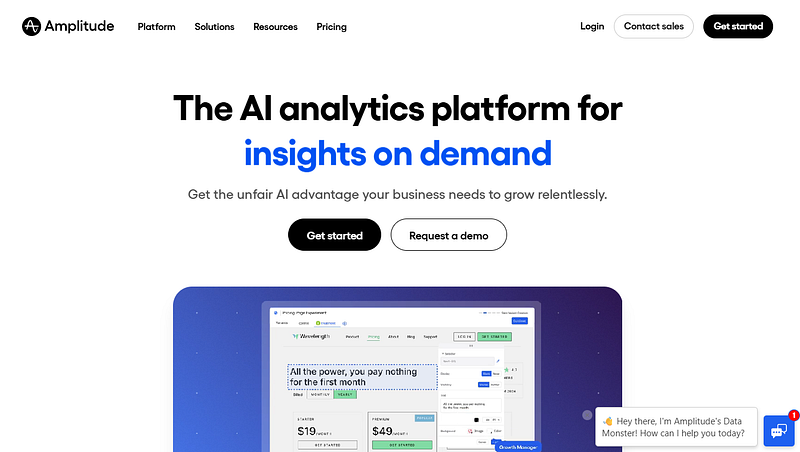
Trusted by thousands of product-led companies, Amplitude combines event tracking, funnel analysis, retention metrics, and AI-powered recommendations to help teams make data-driven decisions.
Its AI capabilities extend beyond analytics, offering predictive insights and automated reporting.
Key Features
- AI-Driven Behavioral Cohorts automatically identify user segments most likely to convert, churn, or engage.
- Predictive Analytics forecast future trends in retention, engagement, and revenue based on historical data.
- Journey Analytics map user paths across apps and websites, highlighting friction points.
- Experimentation Tools integrate with A/B testing platforms to measure impact on user behavior.
- AI-Powered Recommendations suggest product changes or marketing actions based on observed patterns.
Pros
- Comprehensive analytics suite with strong AI augmentation.
- Predictive insights help teams act before churn or drop-offs occur.
- Seamless integrations with major data warehouses and marketing tools.
- Strong reputation and adoption among enterprise product teams.
Cons
- Pricing scales quickly with data volume, making it less accessible for startups.
- Advanced features require technical setup and data maturity.
- Learning curve for teams new to product analytics.
Pricing
- Starter Plan: Free (basic analytics, up to 10M events/month).
- Plus Plan: $49 per month (up to 300K MTUs or 25M events/month).
- Growth Plan: Custom pricing (advanced analytics, unlimited events, behavioral cohorts).
- Enterprise Plan: Custom pricing (predictive AI, advanced governance, dedicated support).
How It Helps Your Business
Amplitude helps businesses by turning raw product usage data into actionable insights. With AI-driven predictions and recommendations, teams can proactively improve user experiences, reduce churn, and increase conversions. For product-led growth companies, Amplitude provides the intelligence needed to align product decisions with customer behavior, ensuring long-term retention and revenue growth.
Learn more at https://amplitude.com/
9. Peec AI
Peec AI is one of the newest entrants to the LLM tracking space, founded in 2025 with a 5.2 million euro seed round.

The platform focuses on simple, multi-country brand visibility and sentiment tracking without overcomplicating the interface.
Key Features
- Multi-country tracking from launch. Simple, clean interface focused on brand monitoring.
- Sentiment analysis across AI platforms. Tracks mentions in ChatGPT, Perplexity, and Google AI Overviews by default.
- Modular LLM add-ons for Gemini, AI Mode, Claude, DeepSeek, and others.
- Unlimited team seats across all plans. Email and Slack support.
Pros
- Very affordable entry point compared to premium platforms.
- Clean, simple interface reduces learning curve.
- Modular pricing lets you only pay for platforms you use.
- Launched with multi-country support built in.
- Unlimited team seats even on starter plans.
Cons
- Very new company means limited track record.
- Smaller feature set than established platforms.
- Limited integration options.
- May face scaling challenges as it grows.
Pricing
Starter: 89 euros/month (25 prompts, unlimited seats, 2,250 answers/month).
Pro: 199 euros/month (100 prompts, unlimited seats, 9,000 answers/month).
Enterprise: 499 euros plus/month (300+ prompts, unlimited seats, 27,000 answers/month).
Add-ons available for additional LLM platforms.
How It Helps Your Business
Peec AI helps your business if you need affordable, straightforward LLM tracking without enterprise complexity. The multi-country support is valuable for global brands. The modular approach means you only pay for what you need.
Learn more at https://peec.ai/
10. Goodie
Goodie takes a different philosophical approach to AI search visibility.

Rather than retrofitting traditional SEO tools, Goodie was built from the ground up for generative engine optimization.
The platform focuses on understanding the factors that make your brand trustworthy to AI systems.
Key Features
- Analyzes what makes your brand a trusted source to AI engines.
- Generative Engine Optimization (GEO) focused approach rather than traditional SEO thinking.
- Content structure recommendations specific to AI parsing.
- Brand positioning verification and optimization. Prompt tracking across major platforms.
Pros
- Purpose-built for AI search, not retrofitted from SEO.
- Focuses on building genuine trust rather than gaming systems.
- Comprehensive brand positioning approach.
- Educational resources help explain AI search behavior.
- Forward-thinking philosophy.
Cons
- Highest pricing tier of all tools.
- Smaller user community means less peer support.
- Complex setup process. May overwhelm beginners.
- Requires mindset shift from traditional SEO.
Pricing
Contact Goodie for custom pricing based on business size and needs. Plans start at $495 per month. Enterprise pricing available.
How It Helps Your Business
Goodie helps your business if you’re ready to think fundamentally differently about search. Rather than optimizing for AI, you’re building genuine expertise and authority that AI systems recognize and cite. This approach creates long-term sustainable visibility.
Learn more at https://higoodie.com/
11. Scrunch
Scrunch takes a focused approach to LLM tracking.

Rather than trying to cover every aspect of answer engine optimization, Scrunch concentrates on doing brand monitoring exceptionally well.
The platform emphasizes clarity and actionable insights.
Key Features
- Monitors brand mentions across major LLM platforms.
- Clean dashboards focused on simplicity.
- Context analysis shows how your brand appears in answers.
- Competitive comparison reveals relative visibility.
- Regular reporting and insights.
- Straightforward interface without unnecessary complexity.
Pros
- Focused approach means deep expertise in brand monitoring.
- Clean interface reduces learning curve.
- Strong competitive analysis.
- Good documentation.
- Smaller tool complexity means faster insights.
Cons
- Narrower feature set than comprehensive platforms.
- Less suitable for teams needing advanced analytics.
- Smaller user community.
- Limited to monitoring rather than optimization guidance.
- May lack features power users need.
Pricing
Pricing not publicly listed. Contact Scrunch directly for custom quotes.
How It Helps Your Business
Scrunch helps your business if brand monitoring is your primary need. The focused approach means better user experience compared to all-in-one platforms. The emphasis on simplicity helps teams get to insights quickly.
Learn more at https://scrunch.com/
12. Surfer AI Tracker
Surfer, known for content optimization, launched their AI Tracker in July 2025.
The tool monitors how your brand and content appear across major AI platforms while providing insights tied to Surfer’s content optimization features.
Key Features
- Monitors brand mentions across ChatGPT, Google AI Overviews, AI Mode, and Perplexity.
- Prompt-level insights show how specific queries return your content.
- Source transparency reveals cited pages.
- Weekly trend reports track visibility changes.
- Integration with Surfer’s content optimization tools.
- Compatible with ChatGPT SEO workflows.
Pros
- Strong integration with Surfer’s content creation features.
- Weekly reporting provides consistent updates.
- Prompt-level insights help optimize specific topics.
- Good for content teams focused on creation and optimization.
- Growing feature set with rapid updates.
Cons
- Currently a paid add-on requiring Surfer subscription.
- Younger platform means less historical data.
- Smaller user community than established tools.
- May lack some advanced enterprise features.
Pricing
Paid add-on to Surfer’s existing plans. Pricing varies based on Surfer subscription level. Approximately $129 per month base for Surfer plus additional cost for AI Tracker.
How It Helps Your Business
Surfer AI Tracker helps your business if content optimization is your priority. The tight integration with Surfer’s editor means you can optimize based on AI visibility insights while writing.
10 Best Practices for AI Search Visibility Optimization at SEO Assistant
This section helps your content appear more often and more accurately in AI search engines like ChatGPT, Gemini, and Perplexity.
These practices combine GEO strategies, strong structure, and people-first writing so AI models recognise and cite your brand more consistently.
1. Start with Semantic URL Structure
Pages with semantic URLs using five to seven words that clearly describe content receive 11.4% more AI citations than generic URLs. Instead of /page-no45, use /best-crm-tools-for-teams. This clarity helps AI systems understand and cite your content.
2. Optimize Content Structure for AI Parsing
AI systems parse content differently than humans. Use these structural elements:
FAQ sections help AI systems quickly extract answers to common questions. Schema markup provides structured data that AI systems can easily understand. Headers and subheaders improve content organization for both users and AI systems. Bulleted lists make information scannable and easy for AI to extract. Short paragraphs with clear topic sentences help AI identify key points. Data visualizations provide information in formats AI systems can reference.
3. Focus on Authority and Trust Signals
AI systems prioritize trustworthy sources. Build authority through:
Original research and data backing claims. Consistent publication demonstrating expertise. Author credentials and bylines. Citations from other authoritative sources. Expert quotes and contributions. Age of content and update frequency.
4. Create Content That Answers Questions Directly
Understand that AI systems transform user questions into multiple related queries. Use Profound’s Query Fanouts approach to see what questions AI systems actually ask. Then create content that answers not just the obvious question, but the adjacent questions AI systems might research.
5. Monitor Multiple Platforms Consistently
Different AI systems cite sources differently. A brand might appear frequently in ChatGPT but rarely in Perplexity. Regular monitoring across all major platforms reveals these patterns and guides your optimization strategy.
6. Analyze Competitor Visibility Patterns
Understand why competitors get cited more frequently. Most tools provide this analysis. Look for patterns in content format, topic choice, depth, and recency. Use this analysis to inform your content strategy.
7. Build Long-Form, Comprehensive Content
AI systems cite comprehensive sources more frequently. Thin content, thin content pages, and surface-level treatment rarely receive citations. Invest in 2,000 plus word pieces that thoroughly explore topics from multiple angles.
8. Keep Content Current and Fresh
AI systems prefer recent information. Establish a content refresh schedule. Update statistics, examples, and information regularly. Note update dates to signal recency to both AI systems and users.
9. Test Multiple Content Formats
Different topics perform better in different formats. Some questions best answered through tables and comparisons. Others through guides and tutorials. Yet others through case studies and real examples. Test different formats and monitor which receive more citations.
10. Combine AI Visibility with Traditional SEO
Don’t abandon traditional SEO for AI visibility optimization. The strongest brands appear in both Google’s top results and AI-generated answers. Metrics should include both traditional rankings and AI citations.
Frequently Asked Questions About AI Search Visibility Tools
Q: How often should I check my AI visibility?
A: Monitor weekly at minimum for active optimization. Most tools provide weekly reports. If you’re testing new content or strategies, check more frequently. The AI search environment changes rapidly, so regular monitoring helps you stay ahead.
Q: Which AI search visibility tool is best for beginners?
A: Peec AI is excellent for beginners due to its simple interface and affordable pricing. ZipTie offers a minimal approach for quick checks. SE Ranking provides more features but remains user-friendly for those comfortable with SEO tools.
Q: Can AI search visibility tools guarantee my brand will appear in AI answers?
A: No tools guarantee AI citations. These tools measure and track visibility, then provide recommendations. Getting cited depends on content quality, topical authority, and whether your content genuinely answers what AI systems are searching for. Visibility tools show where you stand and identify opportunities.
Q: How much time does optimizing for AI visibility take?
A: Combining AI visibility optimization with regular content creation adds 20 to 30% to typical content workflows. You’re not starting from scratch; you’re adjusting existing practices. The exact time depends on your content volume and detail level of optimization.
Q: Should small businesses invest in AI search visibility tools?
A: Yes, but start small. Smaller businesses often benefit from focused tools like Peec AI or free options like ZipTie before investing in expensive platforms. Understanding how your content appears in AI answers helps guide your content strategy regardless of business size.
Q: How do AI search visibility tools differ from traditional SEO tools?
A: Traditional SEO tools measure rankings in Google and organic search traffic. AI visibility tools measure citations in LLM answers. The metrics are different because the search behavior is different. Many brands now need both types of tools.
Q: Can I use multiple AI search visibility tools together?
A: Yes, combining tools often provides better insights. You might use a comprehensive tool like Profound for main tracking plus a focused tool like ZipTie for quick spot checks. Different tools often track slightly different things, so layering them improves your complete picture.
Q: What’s the difference between AI visibility and traditional SEO visibility?
A: Traditional SEO visibility means ranking in Google’s search results and receiving click-through traffic. AI visibility means being cited in AI-generated answers without necessarily receiving direct traffic. These are two different types of visibility requiring different measurement and optimization approaches.
Q: Which AI platforms should I prioritize for visibility optimization?
A: Prioritize based on where your audience searches. ChatGPT currently dominates among AI search interfaces. Google AI Overviews appear in regular Google searches reaching millions daily. Perplexity appeals to research-oriented users. Claude, Gemini, and emerging platforms matter increasingly. Most tools let you customize which platforms you monitor.
Q: How long does it take to see results from AI visibility optimization?
A: Some improvements appear within days to weeks of publishing optimized content. Significant changes in visibility and citation frequency typically take two to three months of consistent optimization. Building true authority takes longer. Don’t expect overnight results, but do expect measurable progress within 60 to 90 days.
Conclusion
AI search visibility tools have evolved from nice-to-have into essential infrastructure for modern businesses. As 37% of product discovery queries now start in AI interfaces, understanding how your brand appears in these AI-generated answers is no longer optional.
The top 12 tools covered in this guide address different business needs and budgets. Enterprise brands like Profound for cutting-edge research and comprehensive multi-LLM coverage. Teams already using Semrush or Ahrefs extend those platforms into AI visibility tracking. Budget-conscious businesses find excellent value in SE Ranking or Peec AI. Specialized needs are served by tools like Goodie or Scrunch.
The key is moving beyond traditional SEO thinking. Building visibility in AI search requires understanding how these systems work, optimizing content structure for AI parsing, building genuine authority, and consistently monitoring your presence across multiple platforms.
Start by selecting a tool that matches your budget and needs. Then implement the best practices outlined in this guide. Combine AI visibility tracking with traditional SEO metrics for the complete picture. Commit to consistent monitoring and optimization over several months.
The businesses that act now to establish their AI search visibility will lead in their categories. Those who wait risk being invisible where their customers are increasingly searching. The AI search era is here. Make sure your brand shows up.
Bonus Tip
To stay current with AI search visibility trends, follow industry publications covering SEO and AI. Test multiple tools during free trial periods before committing budget. Join communities discussing AI optimization for peer insights. Bookmark SEO Assistant, Profound, Ahrefs, and SE Ranking blogs for regular updates on AI search behavior.
Leave a Reply